In many key sectors—such as agri-food, logistics, or product preservation—there is a silent enemy that is rarely seen but can change everything: the lack of real-time information. This is especially critical in remote environments, rural areas, or locations without telecommunications infrastructure.
What happens when we don’t know what’s happening inside a container, warehouse, or storage chamber? The answer is simple: risk, uncertainty, and loss.
The Problem: Making Decisions Blindly
Gases such as ethylene (C₂H₄), oxygen (O₂), and carbon dioxide (CO₂) play an important role in the ripening, preservation, and quality of many products, especially fruits, vegetables, and other perishable goods.
Uncontrolled ethylene can accelerate ripening, while incorrect oxygen or carbon dioxide levels can lead to spoilage and quality loss.
However, in many situations:
- There is no internet connection.
- Mobile coverage is unreliable.
- Physical access to control points is difficult or costly.
This often forces people to rely on occasional measurements, manual inspections, or—worse—assumptions. And when dealing with sensitive products, assumptions are not enough.
The Solution: Data Where There Was None
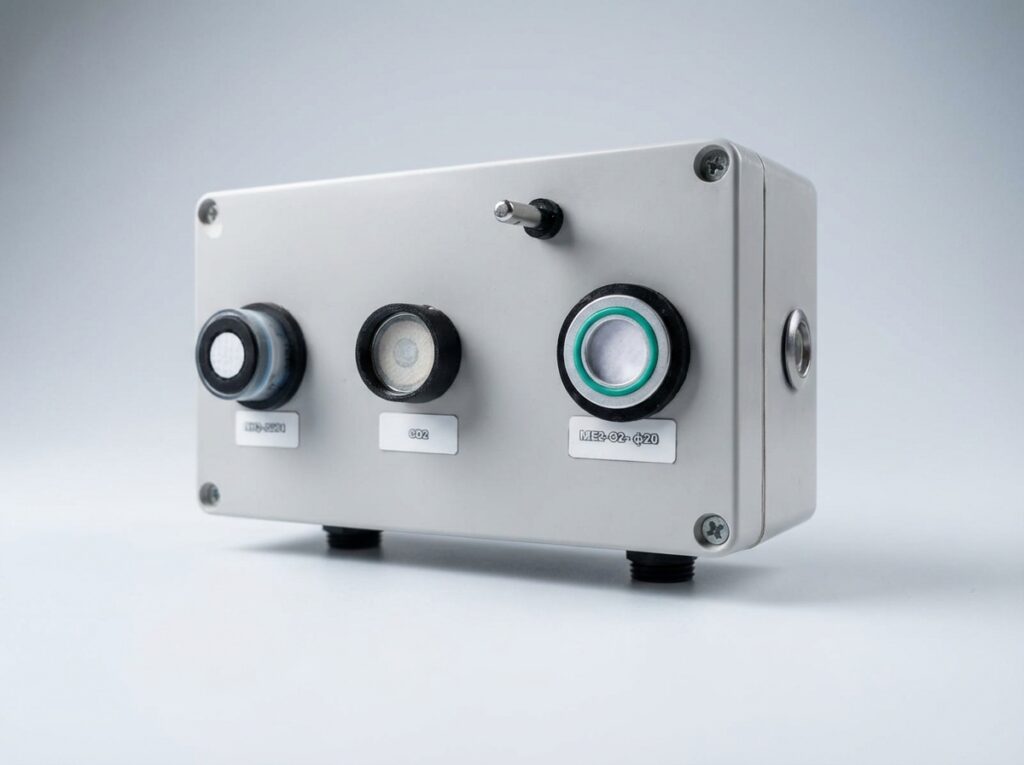
As part of the FUSION project, our task was to meet this challenge. We are developing devices capable of continuously monitoring ethylene, oxygen, and carbon dioxide, even in the most isolated locations, thanks to satellite connectivity.
This means the data does not depend on local networks, routers, SIM cards, or existing infrastructure. The devices can be deployed almost anywhere and continue sending reliable information in real time.
Why Is This So Important?
Having real-time data allows you to:
- Detect problems before they become irreversible
- Optimize preservation and transportation processes
- Reduce food waste and financial losses
- Make decisions based on facts, not guesses
- Extend monitoring to areas that were previously unreachable
In short, it’s about democratizing access to information, even in extreme or disconnected contexts.
A Step Towards Smarter, More Sustainable Management
The ability to monitor critical gases without relying on infrastructure opens the door to more efficient, sustainable, and resilient management models. Less waste, greater control, and more peace of mind for those handling sensitive products.
Because it’s not just about measuring gases.
It’s about having visibility, even when everything else is out of reach.