New Scientific Publication Highlights the Potential of Cold Plasma Technologies
The Institute of Chemical Engineering Sciences (FORTH/ICE-HT), a partner of the FUSION project, has published new scientific research that further demonstrates the potential of cold plasma technologies.
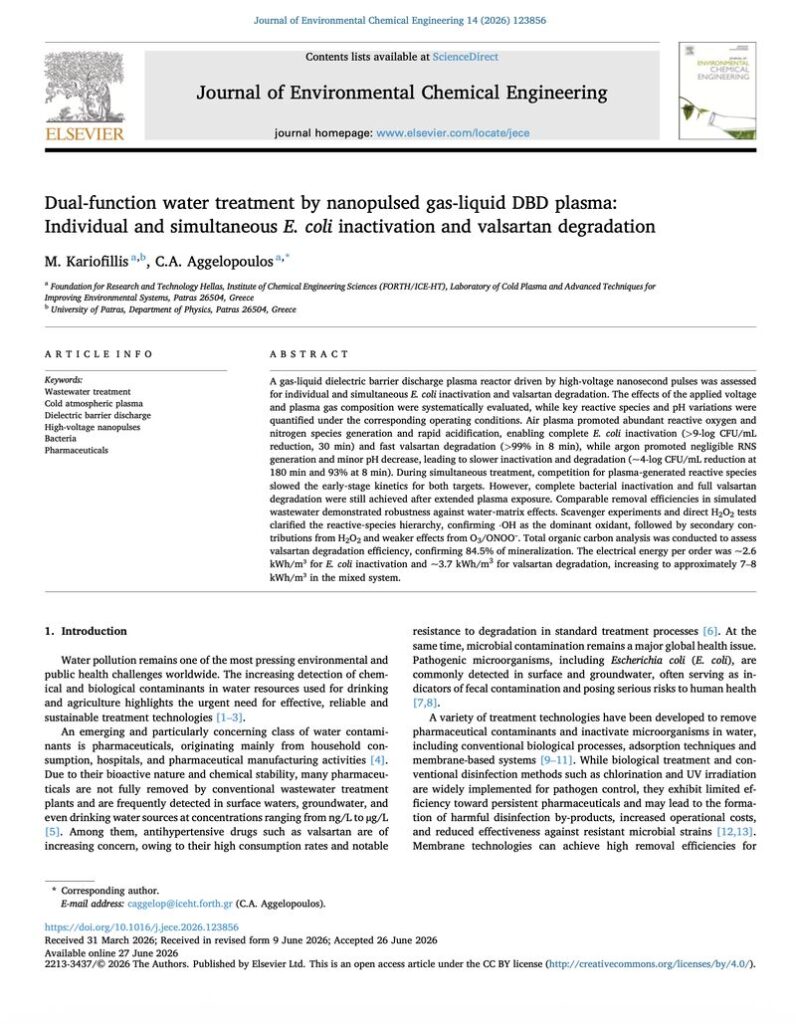
The peer-reviewed paper, entitled «Dual-function water treatment by nanopulsed gas-liquid DBD plasma: Individual and simultaneous E. coli inactivation and valsartan degradation», demonstrates how cold plasma technology can simultaneously inactivate microbial contaminants such as E. coli and degrade pharmaceutical residues, including valsartan, in water.
Although the study focuses on water treatment, it further demonstrates the versatility and effectiveness of cold plasma technologies, one of the key innovations being explored within the FUSION project.
Similar plasma-based approaches are being investigated in FUSION to reduce microbial contamination on fresh fruits, contributing to safer food and lower post-harvest losses across the Mediterranean.
Scientific advances such as this reinforce FUSION’s mission of developing innovative and sustainable technologies that improve food preservation, resource efficiency, and the resilience of agri-food systems.