
The PRIMA FUSION project took part in the 23rd Science and Technology Week of the Region of Murcia (SeCyT 2026), held from 23 to 25 October at the Jardín Botánico del Malecón in Murcia, Spain. Organised by Fundación Séneca, the event brought together more than 75 organisations, over 100 exhibition spaces and more than 450 science outreach activities, with approximately 25,000 visitors expected.
FUSION was represented by two of its partners: the Universidad Politécnica de Cartagena (UPCT), coordinator of the project, and QARTIA. Through practical demonstrations and interactive activities, both teams presented technological solutions and research approaches aimed at reducing food losses, improving postharvest preservation and promoting circular economy practices in Mediterranean agri-food systems.
The exhibition featured three complementary solutions that combine renewable energy, the valorisation of agricultural by-products and digital monitoring.
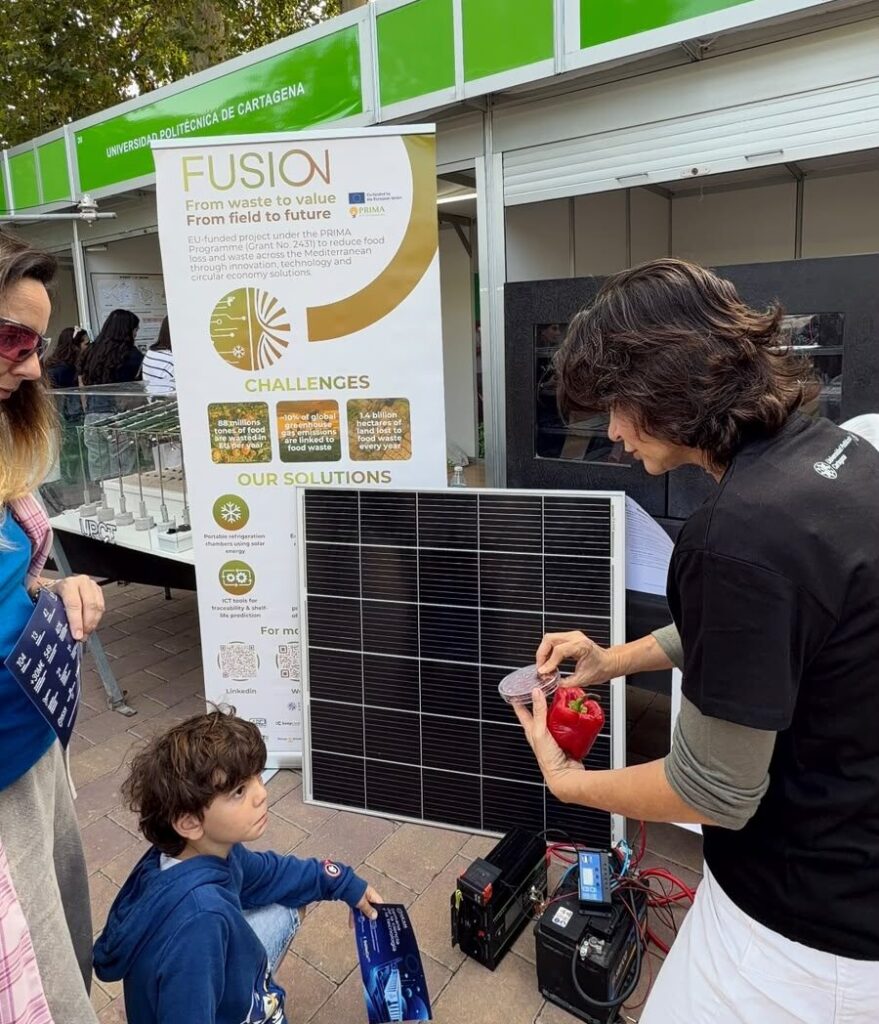
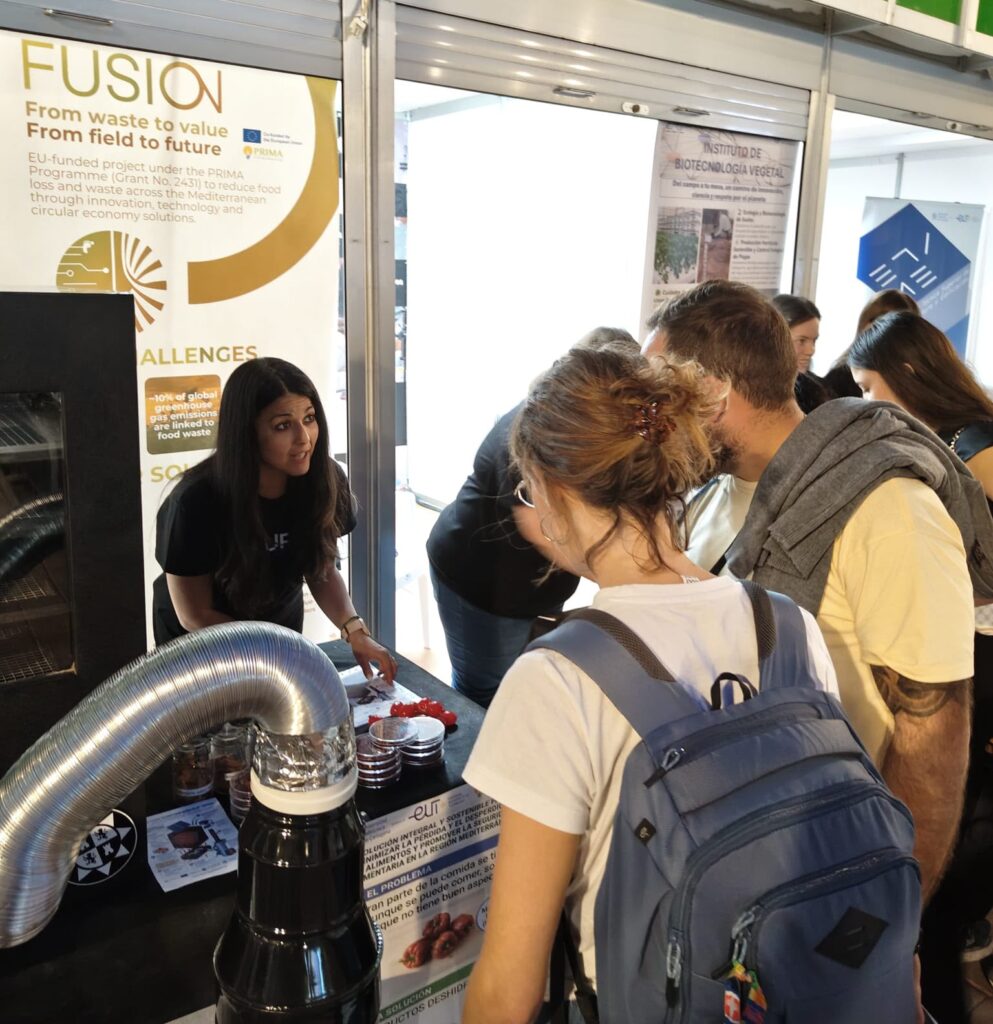
One of the main attractions was a low-cost hybrid food dehydrator that combines photovoltaic solar panels, automotive batteries for energy storage and a biomass-based heating system. The prototype was built from affordable, readily available components, including a repurposed beer keg incorporated into the biomass heating unit.
The system offers a way to dehydrate fruit and vegetables, including products that do not meet fresh-market commercial requirements but remain suitable for processing. By extending the usability of such produce and opening the door to value-added products, dehydration can help reduce postharvest losses and support circular economy strategies.
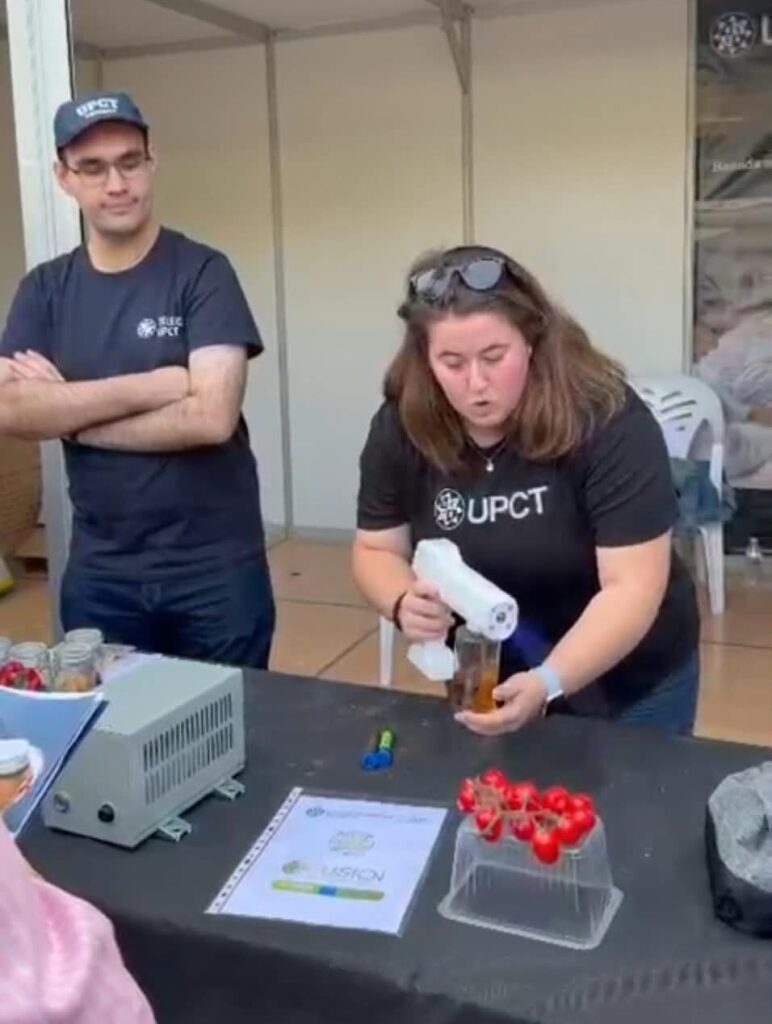
Visitors also discovered research into edible films incorporating hydroxytyrosol, a phenolic compound recovered from olive-derived by-products. Hydroxytyrosol is recognised for its antioxidant activity and potential antimicrobial properties, which makes it a promising ingredient for food-preservation materials.
This work explores how olive by-products can be turned into higher-value materials that may help protect food against oxidative deterioration and microbial spoilage, in line with the principles of waste valorisation and resource efficiency.
The third technology was a sensor-based system, developed by UPCT and QARTIA, that monitors five environmental parameters simultaneously: oxygen (O₂), carbon dioxide (CO₂), relative humidity, temperature and ethylene (C₂H₄).
These variables play an important role in the physiology of fruit and vegetables, particularly during storage and distribution. Real-time monitoring provides information on conditions that affect respiration, ripening and water loss, supporting more precise postharvest management and helping to preserve product quality.
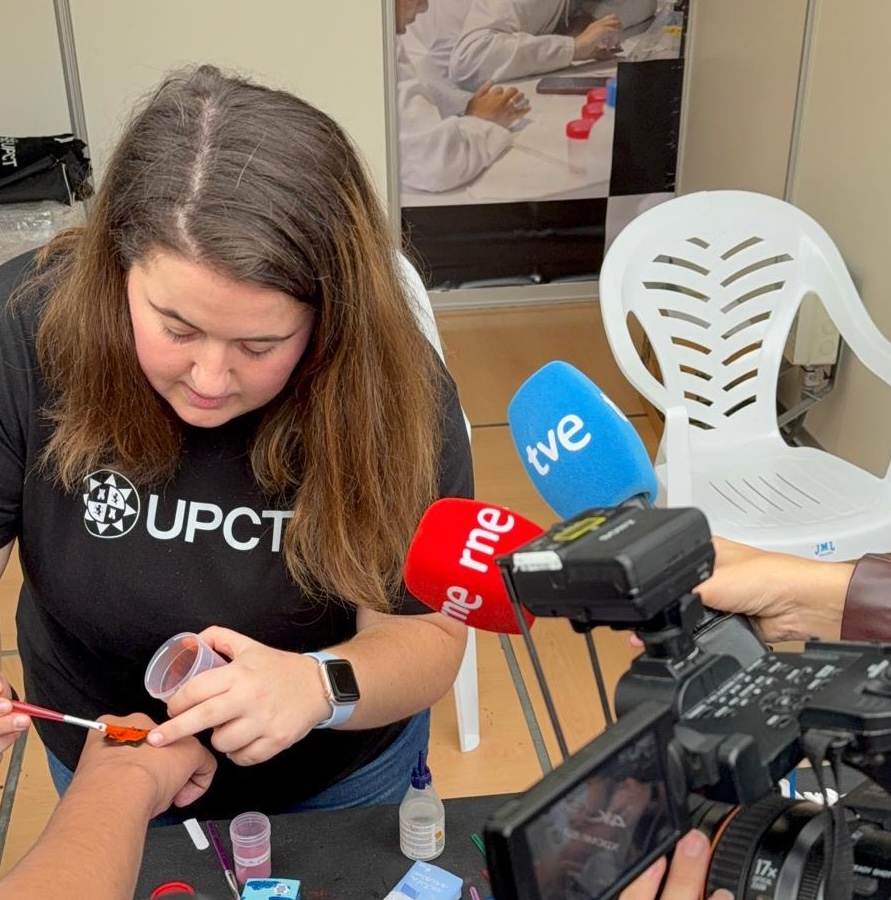
Alongside the technological demonstrations, the teams organised activities for children and families. Among them, young visitors could enjoy temporary tattoos made from dehydrated, food-derived materials. This playful experience offered an accessible way to explain how materials that might otherwise be discarded can be transformed into useful products: what is considered waste today can become a valuable resource tomorrow.
The FUSION stand also received visits from institutional representatives, including the Rectors of the Universidad Politécnica de Cartagena and the Universidad de Murcia, as well as the regional minister responsible for universities. Their presence formed part of an event that brought together universities, research centres, public institutions and citizens around scientific outreach.
Participation in SeCyT 2026 reinforced the dissemination and public engagement objectives of FUSION. The activities reflected several of the challenges the project addresses: food loss reduction, sustainable postharvest preservation, resource efficiency, agricultural by-product valorisation and the integration of innovative technologies into Mediterranean agri-food systems.
Beyond the demonstrations, the event underlined the importance of communicating research in an accessible and engaging way, so that citizens can see how scientific advances translate into practical solutions.
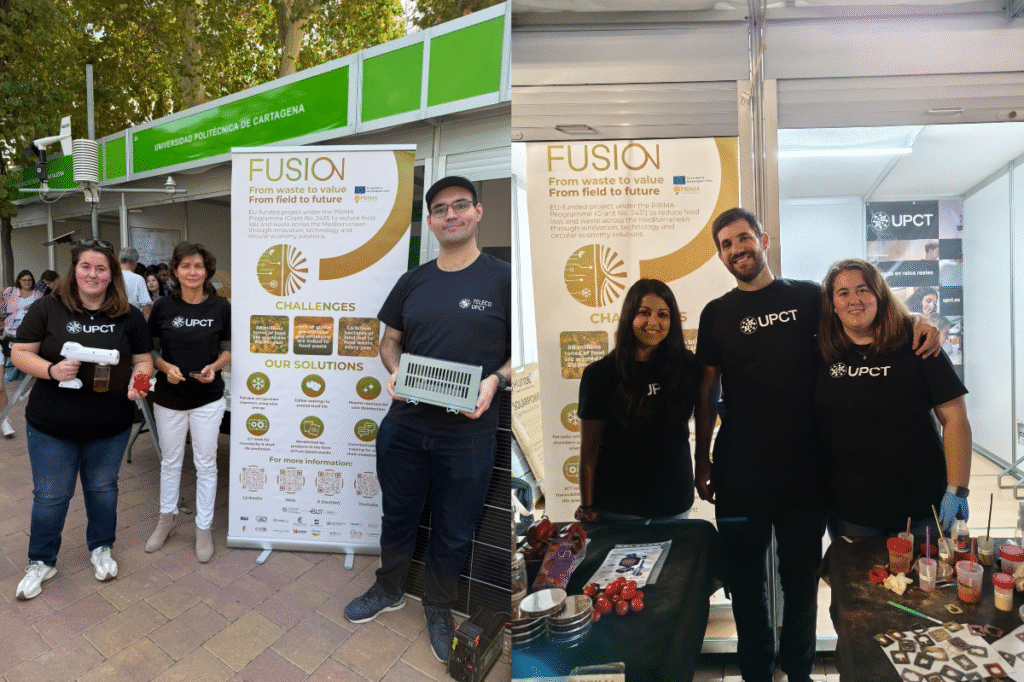
UPCT and QARTIA researchers at the FUSION exhibition stand during Science and Technology Week 2026 in Murcia.

